
About Hermeus: Hermeus accelerates aircraft development by reclaiming rapid, iterative prototyping to build fast, advanced vehicles on relevant timelines. They focus on building, testing, and iterating to deliver high-speed systems for national security needs.
The old assumption was that faster aircraft were too hard to make practical
For decades, hypersonic aircraft have lived closer to test programs than everyday aviation. At roughly five times the speed of sound, air behaves differently. Heat becomes a structural problem. Engines have to work across speed ranges that do not naturally fit together. Materials, inlets, control systems, and flight software must survive conditions that are difficult to fully understand from the ground.
That is why high-speed aviation has often forced an uncomfortable tradeoff: build a missile that moves very fast but is used once, build a research vehicle that proves a point but is hard to operate, or spend years designing toward a perfect aircraft before learning what the real world will do to it.
Hermeus is building a staircase, not a monument
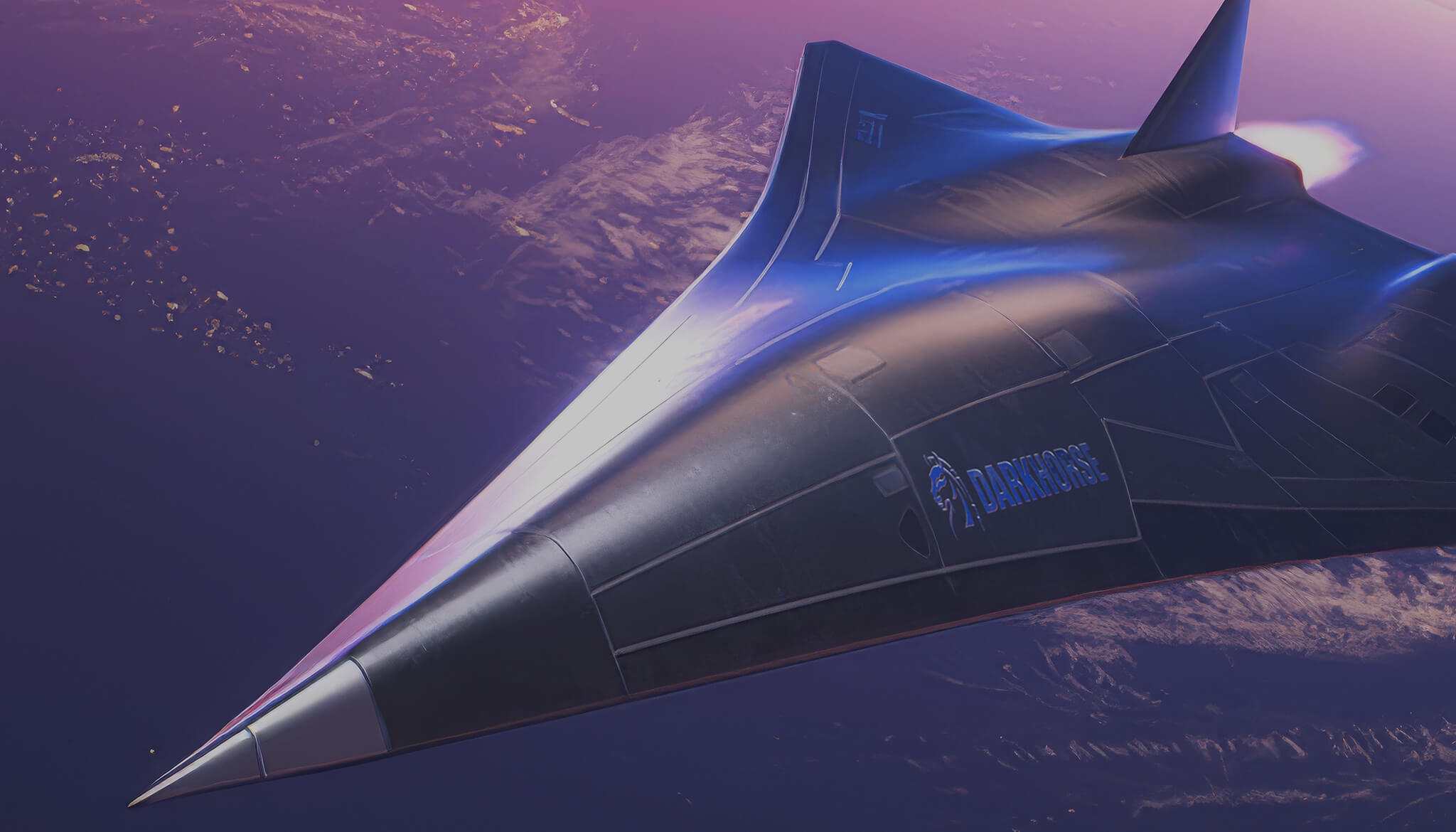
Hermeus is trying to make the learning loop faster. Its aircraft roadmap is staged. Quarterhorse Mk 0 validated major subsystems on the ground. Mk 1 proved high-speed takeoff and landing for a large uncrewed aircraft. Mk 2.1 has begun flight testing as the company works toward supersonic speeds. Each version is meant to retire specific risk and create data for the next one.
At the center of the long-term roadmap is Chimera, Hermeus’ turbine-based combined cycle engine. In plain English, Chimera is designed to let an aircraft begin like a conventional jet and then transition toward ramjet operation at higher speeds. The point is not a more dramatic demo. It is an aircraft that can take off from a runway, accelerate, return, and teach the team something useful for the next flight.
The difference is reuse and cadence
It uses mature components where that helps, builds real aircraft quickly, and treats flight data as what matters.
In aerospace, that is a meaningful choice. A beautiful design can hide risk for years if it never leaves the hangar. Hermeus has chosen a more exposed path: build, fly, learn, and build again. Hypersonic flight will not become useful through a single perfect breakthrough. It will become useful when the aircraft, engines, mission systems, maintenance, and operating habits improve together.
Why this matters beyond aviation
Most people do not need to follow hypersonics closely. They do need to care about the systems that shape national security and response time. A defense planner with faster aircraft has more options inside a shorter window. An engineer with reusable flight-test capacity can learn from real conditions instead of relying only on models.
The human layer here is not about passenger convenience yet. It is about the people who make decisions under time pressure, the engineers trying to close the gap between simulation and flight, and the operators who need tools that work outside a controlled test environment.
The real question
The question Hermeus is asking is not simply whether aircraft can fly faster. It is whether speed can become practical enough to be used, tested, improved, and used again.
That is what makes the company important to us at Canaan. Hermeus points toward a future where high-speed flight is not only a rare demonstration or an expensive one-way system, but a repeatable capability. If the company succeeds, one of aviation’s oldest constraints will begin to loosen: the idea that going faster has to mean learning slower.